Frequently Asked Questions
Everything you need to know about the Good Cheap Stocks System, the screener, and how to use it effectively.
Getting Started
- QWhat is the purpose of this website?
- A
This website was built to give everyone access to a free and simple stock screening tool to find and select high-quality, undervalued stocks. The Good Cheap Stocks System is based on the investment methodology described by Joel Greenblatt in his book The Little Book That Beats the Market — a proven, systematic approach to long-term value investing.
- QHow does The Good Cheap Stocks System select stocks?
- A
The approach is rooted in straightforward financial logic, not guesswork. The methodology comes directly from Joel Greenblatt's book The Little Book That Beats the Market, which demonstrates that disciplined value investing can outperform market averages over the long term. In practice, The Good Cheap Stocks System screens for two key qualities simultaneously: stocks with a low EV/EBIT ratio — meaning they are cheap relative to their earnings — and stocks that generate a high return on capital, meaning they are fundamentally good businesses. We apply minor accounting adjustments to these ratios to make comparisons more meaningful across companies in different industries and geographies.
- QHow often is the data updated?
- A
Stock price data is updated every trading day at approximately 07:00 AM CET. Financial statement data is updated quarterly as we receive it from our data provider.
- QAre all stocks included in the screener database?
- A
The database covers stocks from 20 global exchanges. Financial sector companies and utilities are excluded due to the unique nature of their accounting structures, which makes comparison with other industries unreliable.
Building Your Portfolio
- QHow should I decide how many stocks to choose?
- A
We recommend maintaining at least 20 stocks in your portfolio at any given time. As with any investment portfolio, holding more stocks will generally reduce volatility over the long run and improve diversification.
- QHow do I choose the minimum market capitalisation?
- A
A company's market capitalisation is calculated by multiplying its total number of outstanding shares by the current share price. Our data shows that larger companies tend to be less volatile than smaller ones. To reduce risk, consider focusing on companies with a market capitalisation above $1 billion.
- QHow do I choose among the top-ranked companies?
- A
Statistically, it doesn't matter which specific stocks from the top-ranked results you choose to invest in — you're already selecting from the top few percentiles of all screened stocks. Investing in at least 20–30 of these stocks will help ensure adequate diversification.
- QHow many shares of each stock should I buy?
- A
The Good Cheap Stocks System is based on investing equal dollar amounts in each selected stock. This equal-weight approach keeps your exposure balanced across all positions.
Holding & Selling
- QHow long should I hold these stocks?
- A
The Good Cheap Stocks System is designed with a holding period of approximately one year. This timeframe is intended to maximise your after-tax return. After one year, you screen again for new stocks and build an updated portfolio based on the most current financial data and share prices. If a previously owned stock still appears on the list, you can decide whether to continue holding it.
- QA stock dropped off the list a few weeks after I bought it. What should I do?
- A
Stick to the plan. The Good Cheap Stocks System assumes you will continue holding each stock for a full year, regardless of whether it remains on the screener list.
- QI want to add money in three months. Should I screen for new stocks?
- A
Yes. For best results, always use the most current screener output when adding new capital to your portfolio.
- QHow long does it take for this system to work?
- A
Financial markets are unpredictable in the short term. We strongly recommend committing to The Good Cheap Stocks System for at least three years before drawing any conclusions. There are no guarantees, but decades of evidence and sound financial reasoning support this as a sensible long-term investment approach.
Still have questions?
Read more about the strategy on the How It Works page, or dive straight into the screener to see it in action.
The Little Book That Still Beats the Market
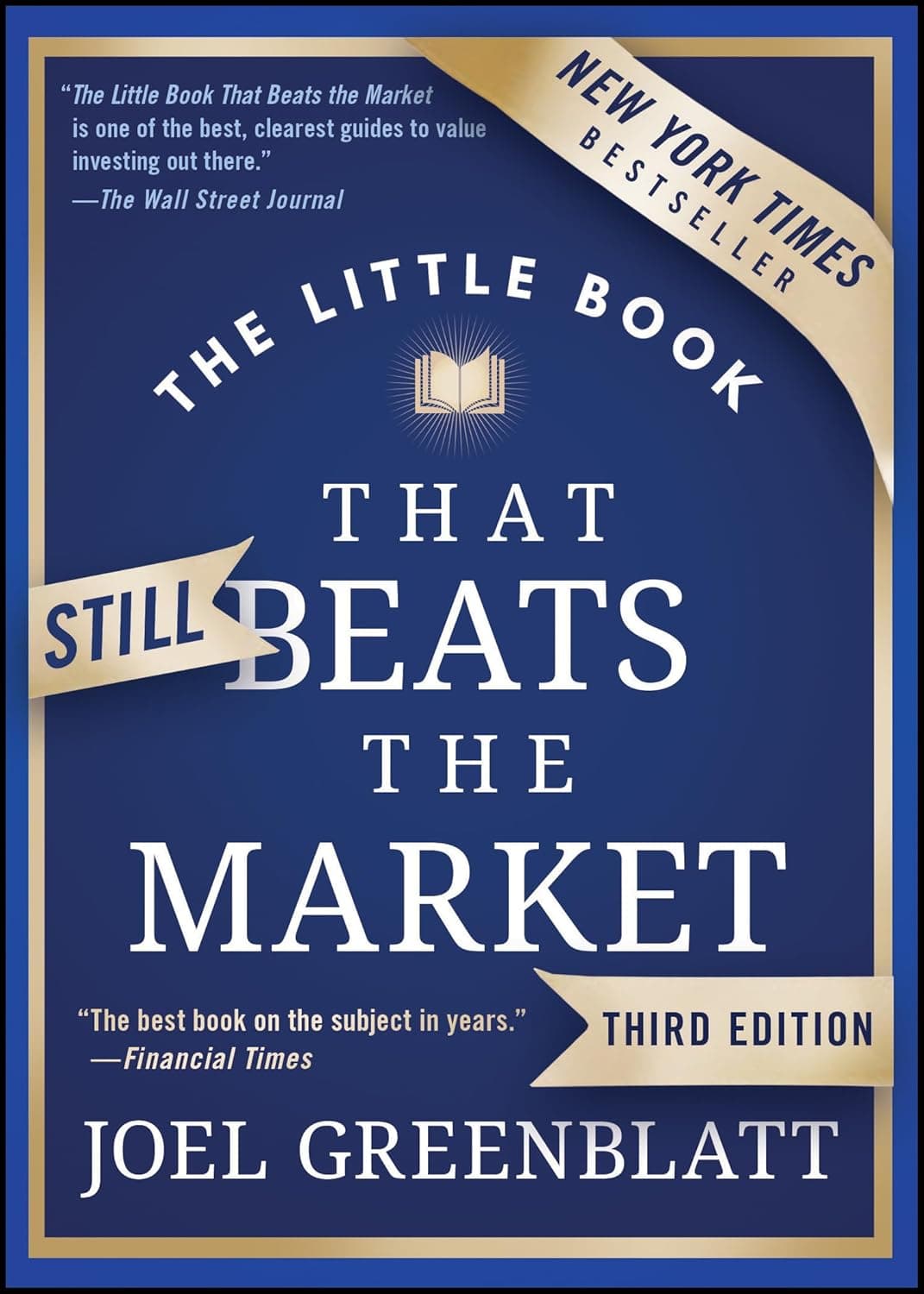
In 2005, Joel Greenblatt published a book that is considered one of the classics of finance literature. A New York Times bestseller with over 300,000 copies in print, the book explains how investors can systematically apply a formula that seeks out good businesses when they are available at bargain prices.
“One of the best, clearest guides to value investing out there.”
“Simply Perfect. One of the most important investment books of the last 50 years.”
Ready to start screening?
Create a free account and get instant access to today's top-ranked stocks across 20 global exchanges. No credit card, no commitment.
100% FreeNo credit card requiredInstant access