How the Good Cheap Stocks System Works
A four-step annual process that systematically finds quality companies at bargain prices — no financial expertise required.
Built on two proven financial metrics
Every stock in the screener is ranked by combining these two numbers. Lowest combined rank wins.
Earnings Yield
EBIT ÷ Enterprise Value
Measures how cheap a stock is. A high earnings yield means you're getting a lot of earnings for the price you pay — the value half of the equation.
Return on Capital
EBIT ÷ (Net Working Capital + Fixed Assets)
Measures how good a business is. A high return on capital means the business efficiently converts invested money into profits — the quality half.
The four-step annual cycle
Repeat this every year. That's the whole strategy.
Screen for top-ranked stocks
Use the Stock Screener to select the top-rated stocks from multiple global exchanges. Choose the number of stocks to view, and the minimum market cap of the companies you want in the list. More stocks means greater diversification; larger companies generally means less volatility. Eliminate any company you would not want to own — but keep at least 20 stocks to properly manage risk.
Pro tip: Aim for 20–30 stocks spread across different sectors for optimal diversification.
Buy them
Purchase the selected stocks through a cost-effective broker. If the amount represents a large percentage of your long-term portfolio, consider spreading purchases over a 12-month period to reduce timing risk and smooth out market fluctuations.
Pro tip: Dollar-cost averaging over the year reduces the risk of buying everything at a market peak.
Hold for 1 year — then sell
Hold your portfolio for approximately one year. The system is designed to maximise after-tax returns: hold gains long enough to qualify for long-term capital gains treatment, and sell any losses just before the one-year mark to capture the tax benefit.
Pro tip: Patience is the hardest part. The system underperforms the market roughly 1 in 4 years — stick with it.
Repeat
After selling, go back to Step 1 and build a new portfolio from the latest rankings. Each annual cycle refreshes your holdings with the current best opportunities, compounding returns over time.
Pro tip: Consistent repetition year after year is what drives long-term outperformance.
Why does it work?
The system works because it is boring by design. It buys unloved, unglamorous companies that the market has priced too cheaply relative to their earnings power. Most investors avoid these stocks emotionally — which is precisely why the opportunity exists.
The strategy will underperform the market in roughly one out of every four years. Investors who abandon it during those periods miss the long-term gains. Those who stick to the process — and repeat it systematically — are the ones who benefit.
The Little Book That Still Beats the Market
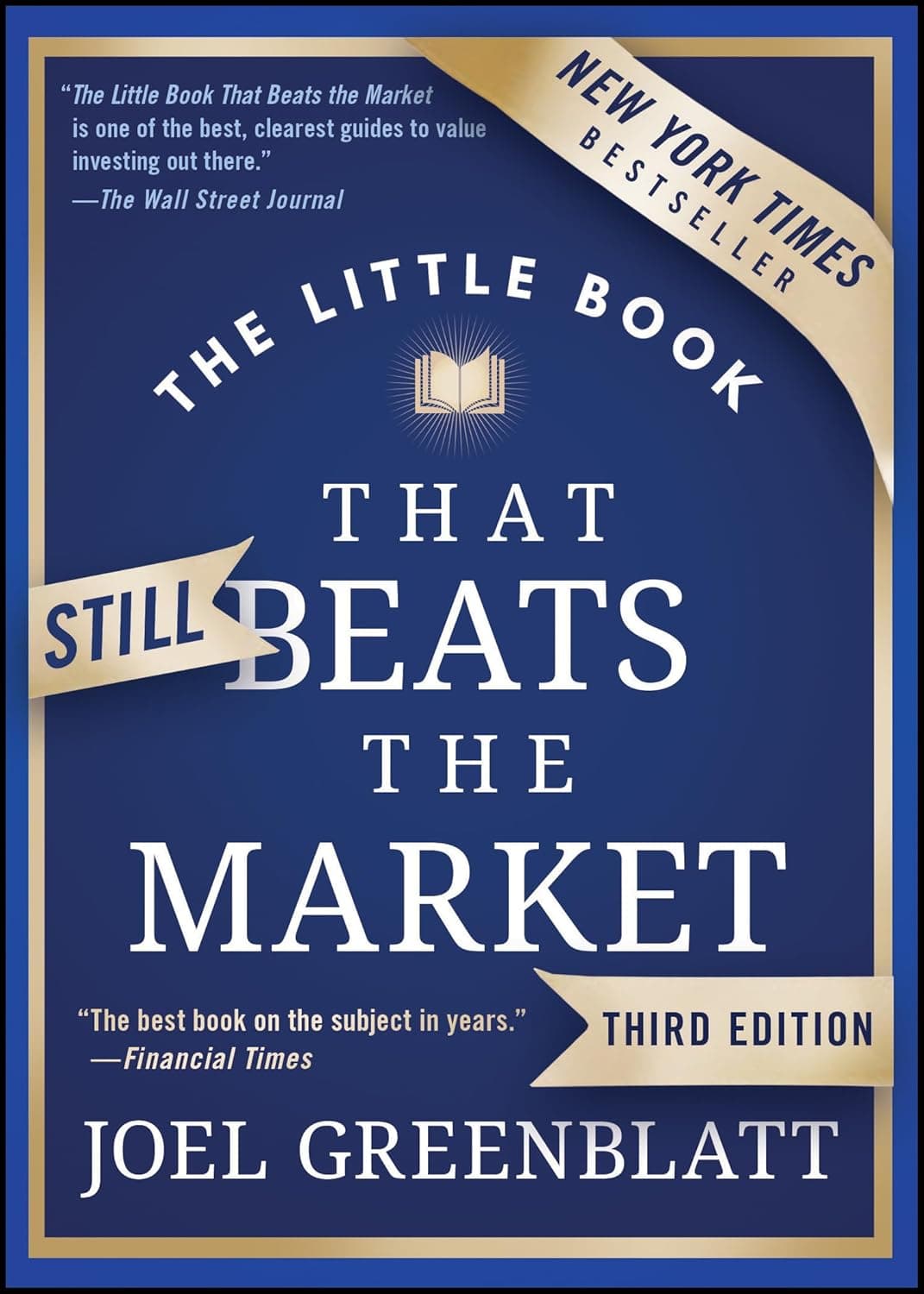
In 2005, Joel Greenblatt published a book that is considered one of the classics of finance literature. A New York Times bestseller with over 300,000 copies in print, the book explains how investors can systematically apply a formula that seeks out good businesses when they are available at bargain prices.
“One of the best, clearest guides to value investing out there.”
“Simply Perfect. One of the most important investment books of the last 50 years.”
Ready to run the screener?
Create a free account and get instant access to today's top-ranked stocks across 20 global exchanges. No credit card, no commitment.
100% FreeNo credit card requiredInstant access