All That Glitters Is Not Gold
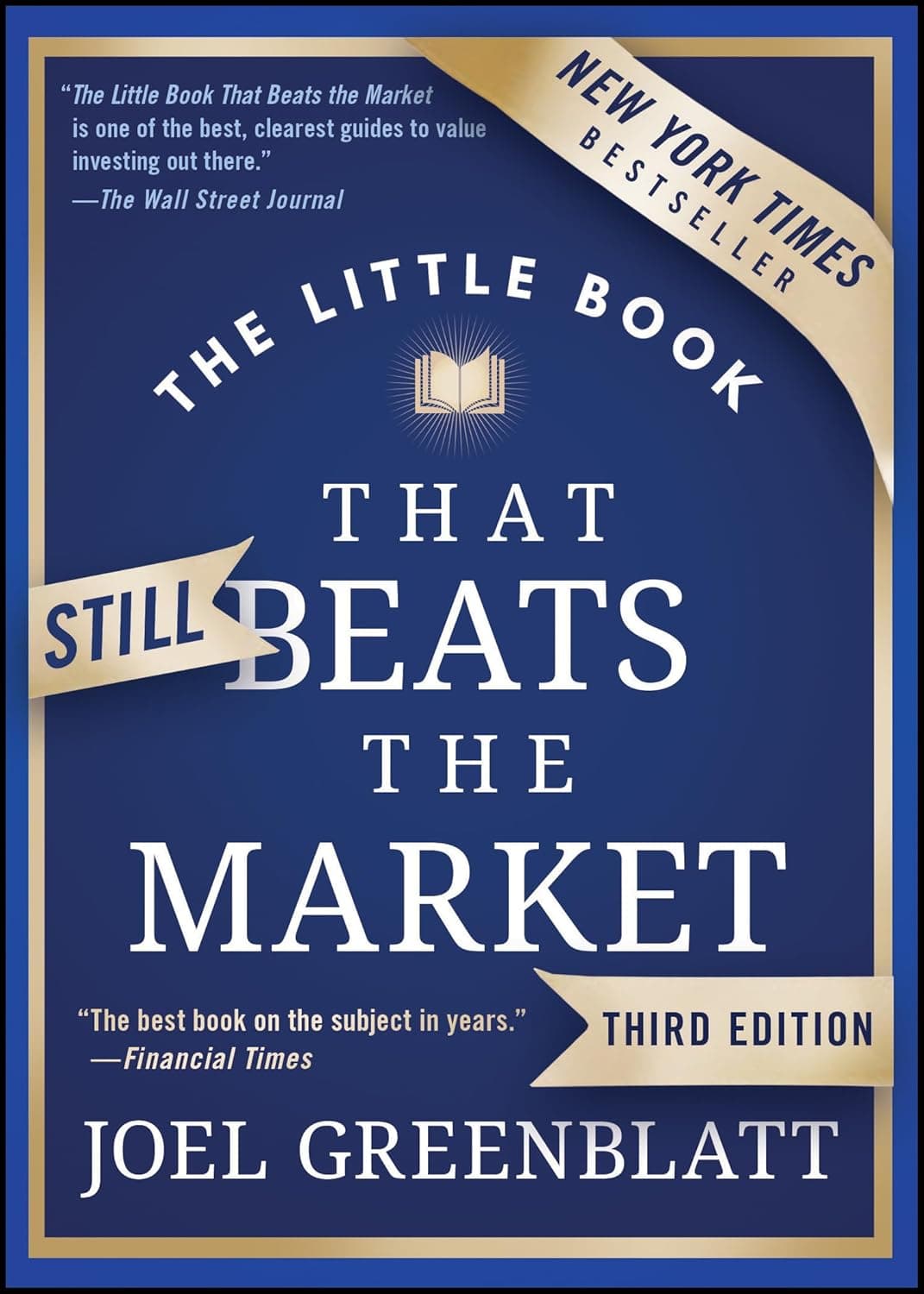
"The Little Book That Beats the Market" reads like a fairy tale. The book is funny, accessible, and promises historical returns that easily beat the stock market. But implementing a purely mechanical investment strategy is not without dangers. Behind the beautiful theory lies a dark side that you as an investor must be extremely well prepared for before entrusting your savings to the algorithm.
Here are the hard truths that aren't on the back cover of the book.
1. The Cruelty of Drawdowns
The Magic Formula is inherently a concentrated value strategy that deviates strongly from the broad market. This means that when things go wrong, they go really wrong. In periods of market panic, the "cheap" Magic Formula stocks often fall much harder than the rest of the market.
During crises (like 2008), backtests have shown that a Magic Formula portfolio can experience drawdowns of more than 50%. Can you sleep peacefully if your portfolio is halved? Understanding the psychology behind the Magic Formula can help you prepare for these moments.
2. The Minefield of Value Traps
The formula is blind. It doesn't know if a company is being sued for billions, or if the company's product will be made obsolete by a new technology next year.
- It buys companies with a low valuation (Earnings Yield), but sometimes that valuation is justifiably very low. This is called a Value Trap.
- Because you buy 20 to 30 stocks, you implicitly accept that there are guaranteed to be a number of bankruptcies or massive losers in your basket. Your winners have to compensate for this — and that is psychologically very tough.
3. Friction Costs: The Silent Killer
The strategy requires you to "refresh" your portfolio every year, leading to a very high turnover rate — sometimes approaching 80% to 100% per year.
- Transaction costs: Every purchase and sale costs money via your broker. Especially with smaller amounts, this eats up your return.
- Taxes: In many countries, you pay tax on realised capital gains. Because you only hold positions for a year, you can end up in higher tax brackets for short-term capital gains. Our tax-smart Magic Formula guide explains how to legally minimise this impact.
4. The "Slippage" with Small-Caps
Many of the best opportunities in the Magic Formula are in small companies. The bid and ask prices (spreads) of these stocks often diverge widely. The paper backtests from the books often calculate with theoretical prices, but in practice, you often pay more when buying and receive less when selling (slippage). Because of this, your actual return is always slightly lower than the theory predicts.
Conclusion: Go In With Your Eyes Open
The Magic Formula is not a magical ATM. It is a volatile, emotionally exhausting strategy that makes high demands on your discipline and portfolio management. The "alpha" (excess return) is simply the risk premium you receive for enduring all these discomforts. Are you willing to pay that price?
For a detailed look at the behavioural traps that cause most investors to abandon ship, read why most people fail at Magic Formula investing.