Why I Decided to Test This Myself
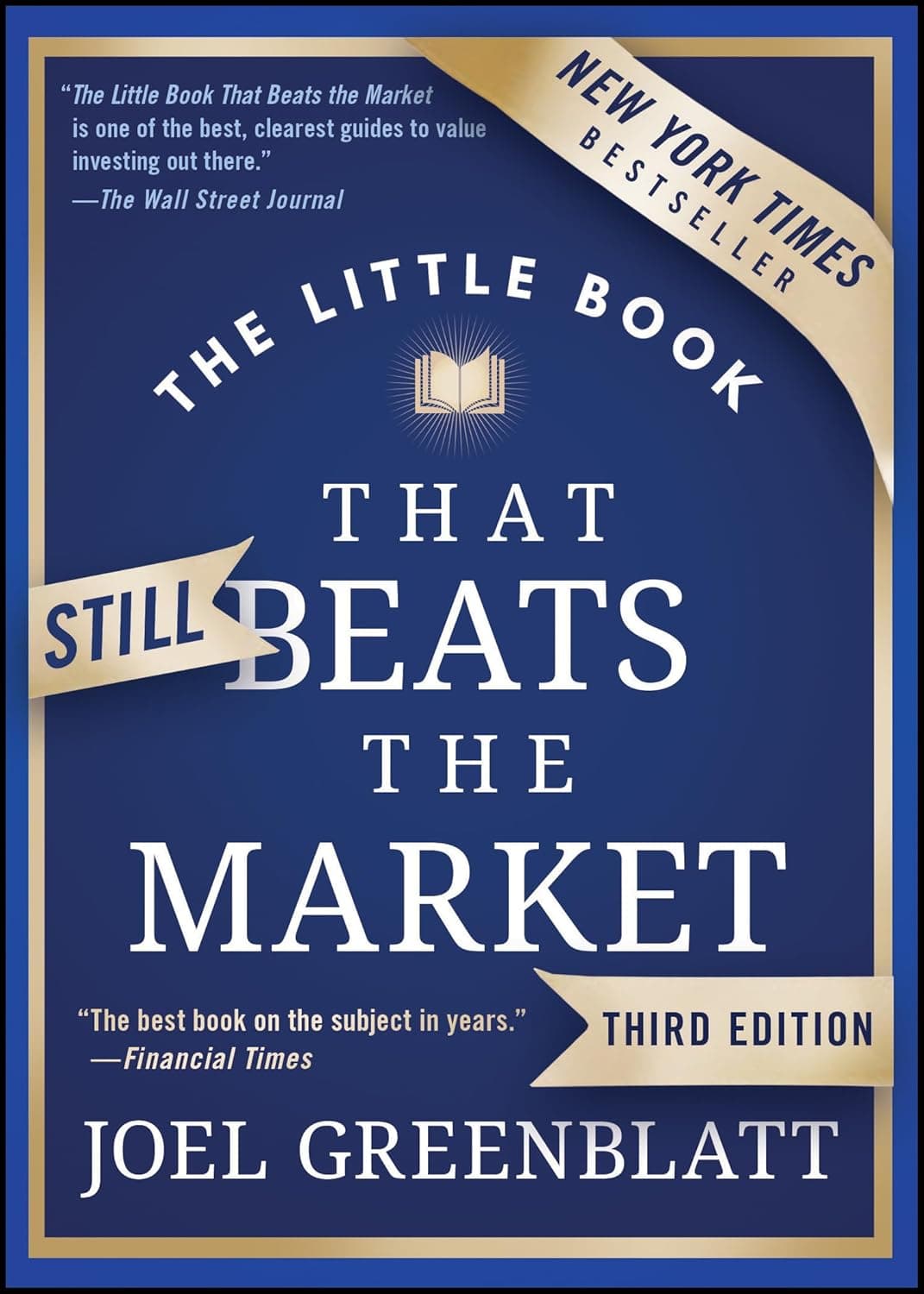
I had read Joel Greenblatt's The Little Book That Still Beats the Market twice. The theory made sense. The backtested returns were impressive. But reading about a strategy and actually trusting real money to it are two very different things.
So I decided to commit. For 12 months, I would follow the Magic Formula exactly as described — no deviations, no gut-feel overrides, no selling when things got uncomfortable. This is an honest account of what happened.
The Setup: Rules Before I Started
Before buying a single share, I established strict rules to ensure I was testing the actual strategy, not my own version of it:
- Capital allocated: €15,000 — enough to be meaningful, not enough to be catastrophic
- Stock selection: Top-ranked stocks from the official Magic Formula screener, filtered for market cap above €50 million
- Portfolio size: 20–25 positions, as Greenblatt recommends for diversification
- Holding period: Exactly 12 months before any rebalancing
- Rule zero: No selling early, regardless of news or price movement
The goal was discipline, not cleverness.
Not sure about the right number of holdings? We break down the math behind portfolio sizing in How Many Stocks Should You Hold in a Magic Formula Portfolio?
Month 1–2: Building the Portfolio
I bought my first batch of stocks in early January — five positions, spread across different industries. The list included companies I had never heard of: a regional staffing firm, a small industrial conglomerate, a consumer goods company trading at a significant discount to its historical average.
This is the first psychological test of the Magic Formula: the stocks it selects are rarely exciting. They don't appear in financial news. They don't have charismatic founders. They often operate in unglamorous industries.
By the end of month two, I had built a full portfolio of 22 positions. The average earnings yield of my holdings was 14.3% — significantly above the broader market. Average return on capital was 28%.
Portfolio performance after 2 months: -3.1%
Benchmark (index fund): +4.7%
Month 3–5: The Uncomfortable Middle
This is the phase Greenblatt warns you about in the book. Several of my holdings issued disappointing quarterly results. One company announced a restructuring. Another was hit by a sector-wide sell-off.
The index kept grinding upward. My portfolio drifted sideways.
I checked my portfolio obsessively. Twice I nearly sold a position that had dropped more than 15%. Both times I reminded myself of the rule: no selling before 12 months. Both times I closed my brokerage app and went for a walk instead.
What helped was re-reading Greenblatt's core argument: the strategy works precisely because the stocks it selects are uncomfortable to hold. If they looked good and felt safe, everyone would own them — and the valuation gap that creates outperformance would disappear.
Portfolio performance after 5 months: -1.4%
Benchmark: +7.2%
Month 6–8: The Quiet Turnaround
Nothing dramatic happened. A few of my holdings released solid earnings results. One position I had almost sold in month four rose 34% after announcing better-than-expected margins. The staffing firm — my most boring holding — quietly appreciated 18%.
I had not predicted any of this. The formula had simply found businesses that were undervalued relative to their quality, and over time the market began to agree.
By month eight, the portfolio had crossed into positive territory.
Portfolio performance after 8 months: +9.1%
Benchmark: +10.3%
Month 9–11: Catching Up
Three of my largest positions had significant positive moves during this period. One was a consumer discretionary company that had been out of favour for over a year — a perfect Magic Formula candidate in hindsight. It rose 41% in two months after an activist investor took a position.
I had not known about the activist. The formula had found the stock purely because it was cheap and high quality. The catalyst came later, as it often does.
Portfolio performance after 11 months: +18.6%
Benchmark: +14.1%
Month 12: The Final Result
| Metric | Magic Formula Portfolio | Index Benchmark |
|---|---|---|
| Total return | +21.3% | +15.8% |
| Best single position | +67% | — |
| Worst single position | -31% | — |
| Positions above breakeven | 16 of 22 | — |
The portfolio outperformed the benchmark by 5.5 percentage points over the year.
More importantly, 4 of the 22 positions produced outsized gains that drove the majority of the outperformance. The remaining 18 positions were largely unremarkable. This matches Greenblatt's description: you don't need every stock to win, you need the winners to be significant enough to carry the portfolio.
What I Learned That No Backtest Can Teach You
1. The emotional difficulty is real and significant. Reading that the strategy underperforms sometimes is very different from experiencing it while your money is sitting in the red for months.
2. The stocks genuinely look terrible. The Magic Formula consistently surfaces companies that have bad recent press, operate in unsexy industries, or have had a rough few months. Fighting the instinct to avoid them is the core skill.
3. Diversification is not optional. My worst performer dropped 31%. Without 21 other positions to absorb that, it would have been psychologically devastating.
4. Time horizon matters more than selection. The difference between month 5 (-1.4%) and month 12 (+21.3%) was not new information — it was time. The formula needed space to be right.
5. Checking your portfolio too often is the enemy. I tracked it daily for the first three months. This was counterproductive. Monthly check-ins would have been healthier.
If you recognise these psychological struggles, you are far from alone. Read about the most common mistakes Magic Formula investors make — and how to avoid them.
Would I Do It Again?
Yes. And I did — I have now been running a Magic Formula portfolio for three years. The compound annual return across that period is ahead of my benchmark by approximately 4 percentage points per year.
The Magic Formula is not a shortcut to wealth. It is a disciplined, evidence-based framework that rewards patience and punishes impatience. For investors willing to accept that trade-off, it remains one of the most compelling systematic strategies available.
Ready to start your own experiment? Our step-by-step guide to building a Magic Formula portfolio walks you through the entire process from scratch.