What If Beating the Stock Market Was Actually Simple?
Most investors believe that outperforming Wall Street requires sophisticated algorithms, expensive analysts, and years of financial training. Joel Greenblatt proved them all wrong.
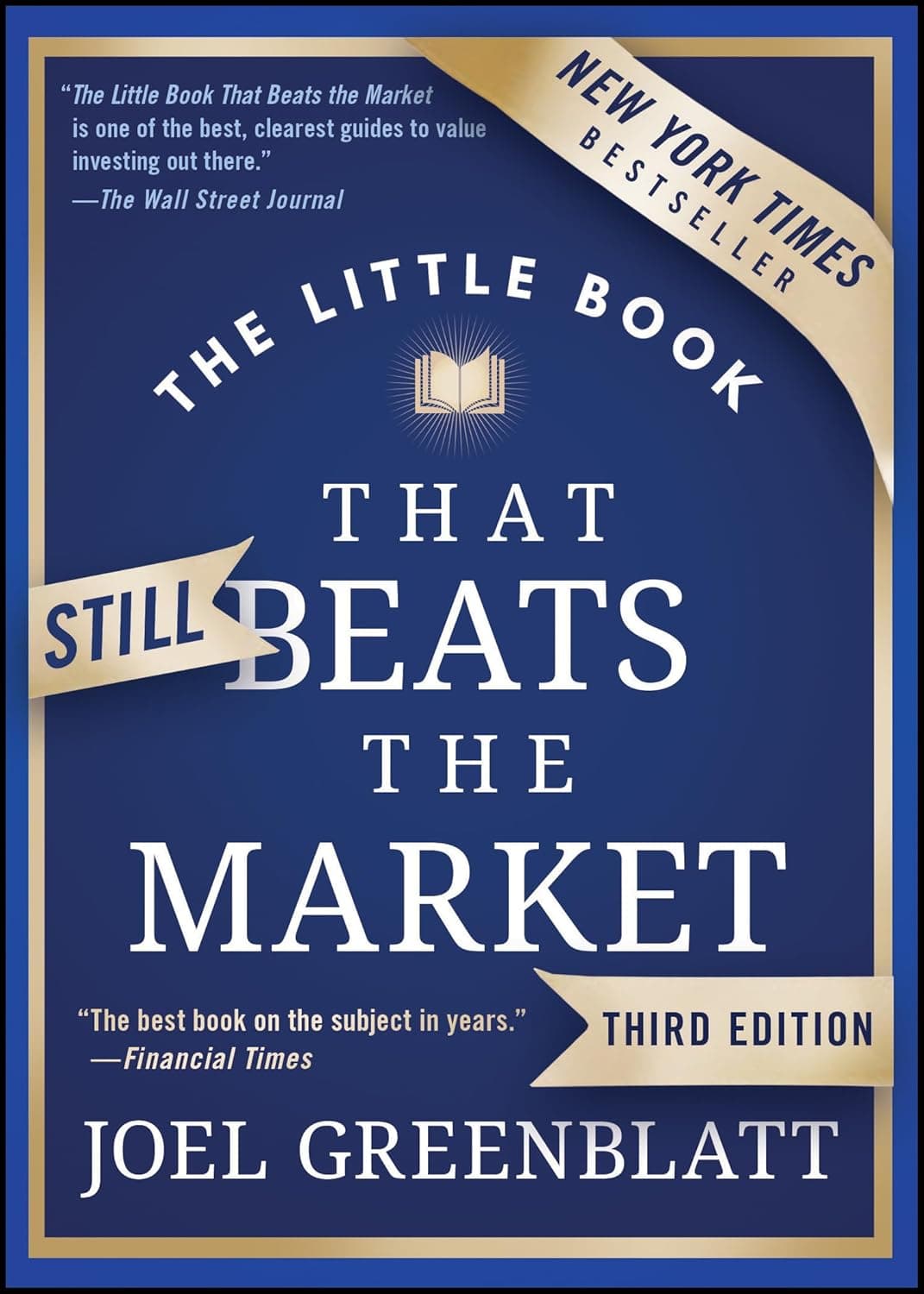
In his landmark book The Little Book That Still Beats the Market, Greenblatt introduced a deceptively simple investment strategy called the Magic Formula. It uses exactly two numbers to rank and select stocks — and it has historically delivered returns that most professional fund managers can only dream of.
This article breaks down exactly what those two numbers are, why they work, and how any individual investor can apply this strategy today.
Who Is Joel Greenblatt?
Joel Greenblatt is the founder of Gotham Capital, a hedge fund he ran from 1985 to 1994. During that period, his fund achieved an average annual return of approximately 40% per year — one of the most impressive track records in the history of investing.
Greenblatt is also a professor at Columbia Business School, where he teaches value investing. Rather than keeping his strategy secret, he wrote it down in a book specifically designed for ordinary investors. That alone tells you something about how he thinks.
His philosophy is rooted in the tradition of Benjamin Graham and Warren Buffett: buy good businesses at cheap prices. The Magic Formula is simply a systematic, quantifiable way to do exactly that.
The Two Numbers That Do All the Work
The Magic Formula ranks stocks using only two financial metrics:
1. Return on Capital (ROC)
Return on Capital measures how efficiently a company uses its invested capital to generate profit. A company that earns €20 million in operating profit while only needing €100 million in capital has an ROC of 20%. That's a sign of a genuinely good business — one with competitive advantages, pricing power, or operational efficiency.
The formula: ROC = EBIT ÷ (Net Working Capital + Net Fixed Assets)
High ROC businesses tend to be companies with strong brands, recurring revenues, or significant moats that competitors can't easily cross.
2. Earnings Yield
Earnings Yield measures how cheap a stock is relative to its earnings. It is essentially the inverse of the price-to-earnings ratio and answers the question: for every euro I invest, how much in earnings am I getting back?
The formula: Earnings Yield = EBIT ÷ Enterprise Value
A high earnings yield means you're buying a company's earnings at a discount — you're getting more bang for your buck compared to the broader market.
For an in-depth look at how these two metrics work and why Greenblatt chose them, read our complete guide to Earnings Yield and Return on Capital.
Why Two Numbers Instead of One?
Using only one metric leads to traps.
If you screen only for cheap stocks (high earnings yield), you often end up with companies that are cheap for a reason — declining businesses, troubled management, or structural industry problems. These are known as value traps.
If you screen only for quality stocks (high return on capital), you tend to overpay. High-quality businesses attract investor attention, which drives up prices and reduces future returns.
The Magic Formula combines both signals simultaneously. It looks for companies that are both high quality and undervalued. This combination is statistically rare — and historically very profitable.
The Historical Returns Are Hard to Ignore
Greenblatt backtested the Magic Formula on the US stock market from 1988 to 2004. The results:
| Portfolio | Average Annual Return |
|---|---|
| Magic Formula (large-cap) | ~22.9% |
| S&P 500 | ~12.4% |
| Magic Formula (small+large) | ~30.8% |
Over a 17-year period, a €10,000 investment using the Magic Formula would have grown to over €1 million. The same amount invested in the S&P 500 would have grown to roughly €73,000.
These are backtested figures and past performance never guarantees future results. But the magnitude of outperformance across nearly two decades is difficult to dismiss as noise.
Curious what happens over an even longer horizon? We analysed what 20 years of strict Magic Formula backtests reveal about the power of patience and compounding.
How Lazy Is "Lazy"?
Here's the part most investors love: the Magic Formula requires very little ongoing attention. The basic implementation works like this:
- Use a stock screener to get a ranked list of stocks
- Buy 5–7 stocks per month from the top of the list
- After 12 months, sell all positions and replace them with a new set
- Repeat annually
The entire annual time investment? A few hours per year. No earnings calls to listen to. No balance sheets to comb through. No analyst reports to read. The formula does the ranking; you do the buying.
The Catch: You Have to Be Psychologically Strong
The Magic Formula's Achilles heel is not mathematical — it's emotional.
The strategy will underperform the market for stretches of one, two, even three years. During those periods, the portfolio may hold stocks that look terrible on the surface — unfashionable industries, companies with recent bad news, businesses in temporary trouble.
Most investors abandon the strategy precisely when it's about to work best. Greenblatt calls this the central paradox of the approach: the strategy works because it's uncomfortable to follow.
If it were easy, everyone would do it. The moment everyone does it, the edge disappears.
The psychological challenges of sticking with the Magic Formula are well-documented. We explore the cognitive biases that trip up even the smartest investors in The Psychology Behind Magic Formula Investing.
Is the Magic Formula Right for Everyone?
The Magic Formula is well-suited for investors who:
- Prefer a rules-based, systematic approach over stock-picking intuition
- Have a long time horizon (minimum 3–5 years, ideally 10+)
- Can tolerate periods of underperformance without panicking
- Want market exposure without paying for active management
It is less suitable for investors who need to beat the market every single year, who have very short time horizons, or who invest in markets with limited data availability.
Key Takeaways
The Magic Formula is not magic — it's disciplined, systematic value investing. By combining return on capital (quality) with earnings yield (value), Greenblatt created a simple but powerful framework that has historically beaten the market by a wide margin.
The strategy demands patience and psychological discipline more than financial expertise. That's precisely what makes it accessible to ordinary investors — and why it remains one of the most compelling approaches in quantitative investing today.